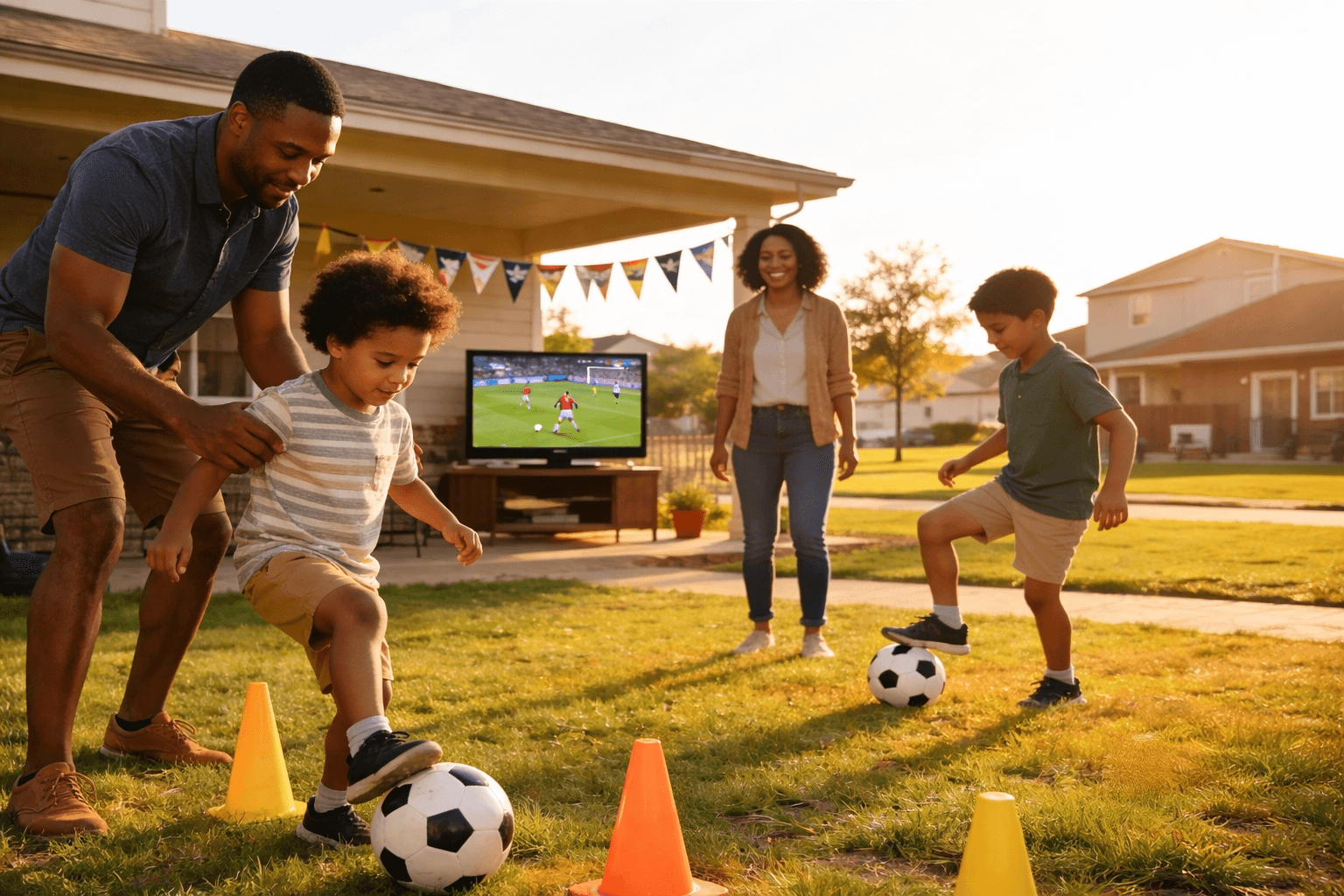
This summer, the FIFA World Cup comes to the United States for the first time in over three decades — and the energy building around it is unlike anything the American sports landscape has seen in years. Cities across the country are buzzing. Families are paying attention. And kids everywhere are watching the world’s best players and thinking: I want to do that.
If your child has ever shown even a passing interest in soccer, there has never been a better moment to lean into it.
Why This Moment Matters for Youth Sports Families
Major sporting events have a proven ripple effect on youth participation. When kids see a sport elevated to the world stage — when they watch athletes who look like them competing in front of billions of people — it sparks something. Curiosity turns into questions. Questions turn into “Can I try that?”
Soccer is already one of the most widely played youth sports in the country, with roughly one in four kids participating at some level. But with the World Cup being hosted on American soil this summer, experts and youth sports organizations nationwide are anticipating a fresh wave of new players — particularly younger kids and first-timers who are being drawn in by the excitement.
This is the “World Cup effect,” and it’s real. Youth soccer saw a significant participation boost the last time the U.S. hosted the tournament. Leagues filled up. Registration numbers jumped. Kids who had never kicked a ball started asking their parents to sign them up.
That wave is coming again. The question for families is: do you want to be ahead of it, or scrambling to find a spot after rosters are full?
Soccer Is the Ideal First Sport — Here’s Why
For parents who haven’t yet introduced their child to soccer, spring is the best time to start — and the sport itself is uniquely well-suited to young athletes:
Low barrier to entry. Outside of cleats and shin guards, soccer requires very little gear. There’s no expensive equipment to buy, no complex safety apparatus to figure out. A ball and some open space are enough to start developing a love for the game.
Every kid plays. Unlike some sports where positions determine how much action a player sees, soccer keeps kids moving constantly. There are no long stretches of standing still. Every player on the field has a role, and the game rewards effort and hustle just as much as skill.
It teaches without lecturing. Soccer naturally builds spatial awareness, communication, decision-making under pressure, and the ability to recover quickly from mistakes — all without a single lecture from a coach. The game teaches the lessons on its own.
It scales with your child. A kid who starts at age five playing recreational soccer can follow the sport all the way through high school, college, and beyond if they love it. Or they can play casually for a few seasons and take something valuable with them regardless. Either outcome is a win.
How to Channel the World Cup Energy at Home
You don’t have to wait for your child’s league to start to tap into the excitement. Here are a few simple ways to bring the World Cup moment into your household this spring and summer:
Watch together. The World Cup is one of the few sporting events where the entire world is paying attention at the same time. Watching matches as a family — even if you don’t know the rules perfectly — creates shared memories and sparks natural conversations about teamwork, sportsmanship, and perseverance.
Learn the basics together. If soccer is new to your family, explore it as a team. Learn the positions, watch some highlights, talk about what different players do. Kids love when parents are curious alongside them rather than acting like experts.
Get outside and kick a ball. It doesn’t need to be structured. Even ten minutes of passing in the backyard or at a local park builds muscle memory, coordination, and — most importantly — a positive association with the sport.
Let your child pick a team to root for. One of the great things about the World Cup is that kids can connect with it through heritage, geography, or just a jersey they think looks cool. Having a team to cheer for makes the whole tournament more personal and exciting.
For Families Already in Soccer: This Season Carries Extra Weight
If your child is already involved in youth soccer, this is a season worth savoring. The sport they’ve been practicing — the one they run drills for every Tuesday and Thursday evening — is about to be the center of the sports universe.
Use this moment to remind your young player why soccer matters. Talk about the players they admire. Watch professional matches and point out the fundamentals they’re working on at practice. Help them see themselves as part of something bigger than a single game or season.
The World Cup has a way of making soccer feel magical again, even for kids who’ve been playing for years. Let it.
Finding a League Near You
If you’re looking to sign your child up for soccer this spring, check with your local parks and recreation department, community center, or youth sports association. Spring leagues are actively forming across the country right now, and many have open registration for all skill levels — from first-timers to kids who’ve been playing for years.
Not sure where to start? Visit YouthSportsAxis.com to connect with leagues, coaches, and youth sports communities in your area.
The World Cup only comes around every four years. This summer, it’s in our backyard. Whether your child is already a soccer player or has never set foot on a field, now is the time to embrace the moment — and maybe discover a lifelong love of the beautiful game.
Let’s go! ⚽🏆
Connecting families to the sports they love — YouthSportsAxis.com